
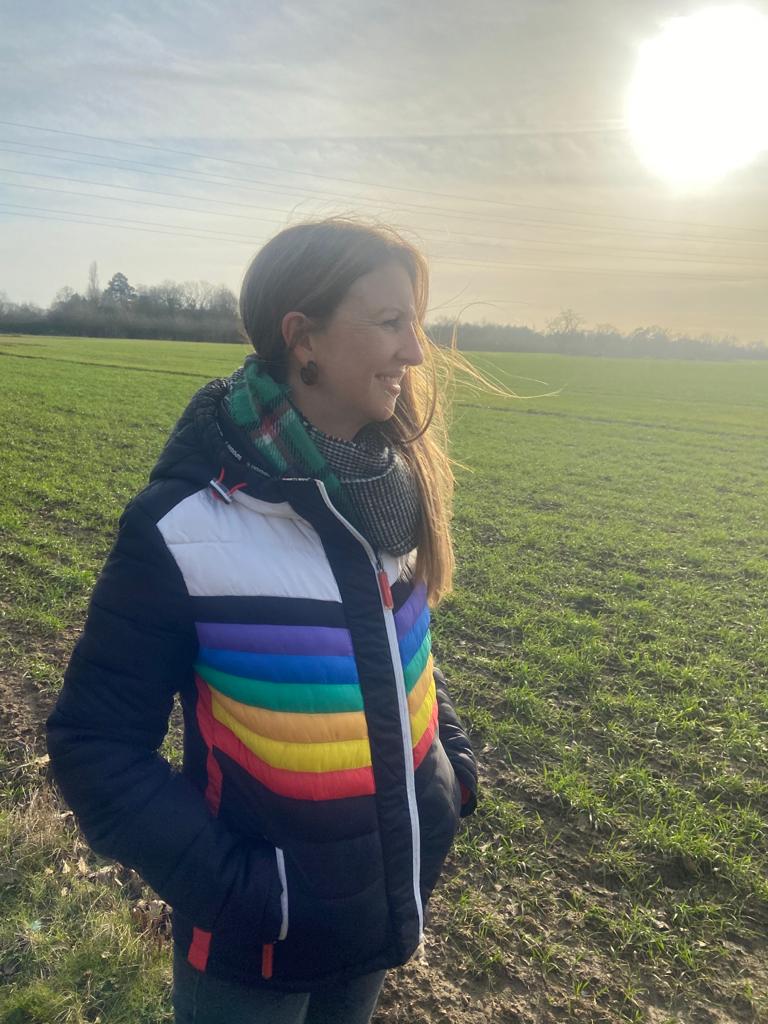
Rachel Sodey is a Suffolk based artist and printmaker who responds directly to the landscape around her. Rachel walks the Suffolk countryside with her dog Bo and draws inspiration from the flat land lines, the changing light, and the mood and feelings of the seasons. We are delighted to introduce a selection of her prints, created using a variety of textural printmaking techniques. In this interview with Rachel we get a little insight into her work and find out more about her process.
How long have you been printing for? When did you start out?
My first real experience of printing was at The Norwich School of Art where I studied a degree in fine art textiles. My favourite workshop was the print room and I definitely spent most of my time in there. The technicians were absolutely amazing and taught me so much. At Norwich I mostly worked with screen printing and free-hand embroidery. It was only when I started teaching at West Suffolk College that I rediscovered my love for printing through teaching it. I have the freedom to teach all aspects of printmaking and this is what drives my own work forward.

What is it about the Suffolk landscape that inspires you?
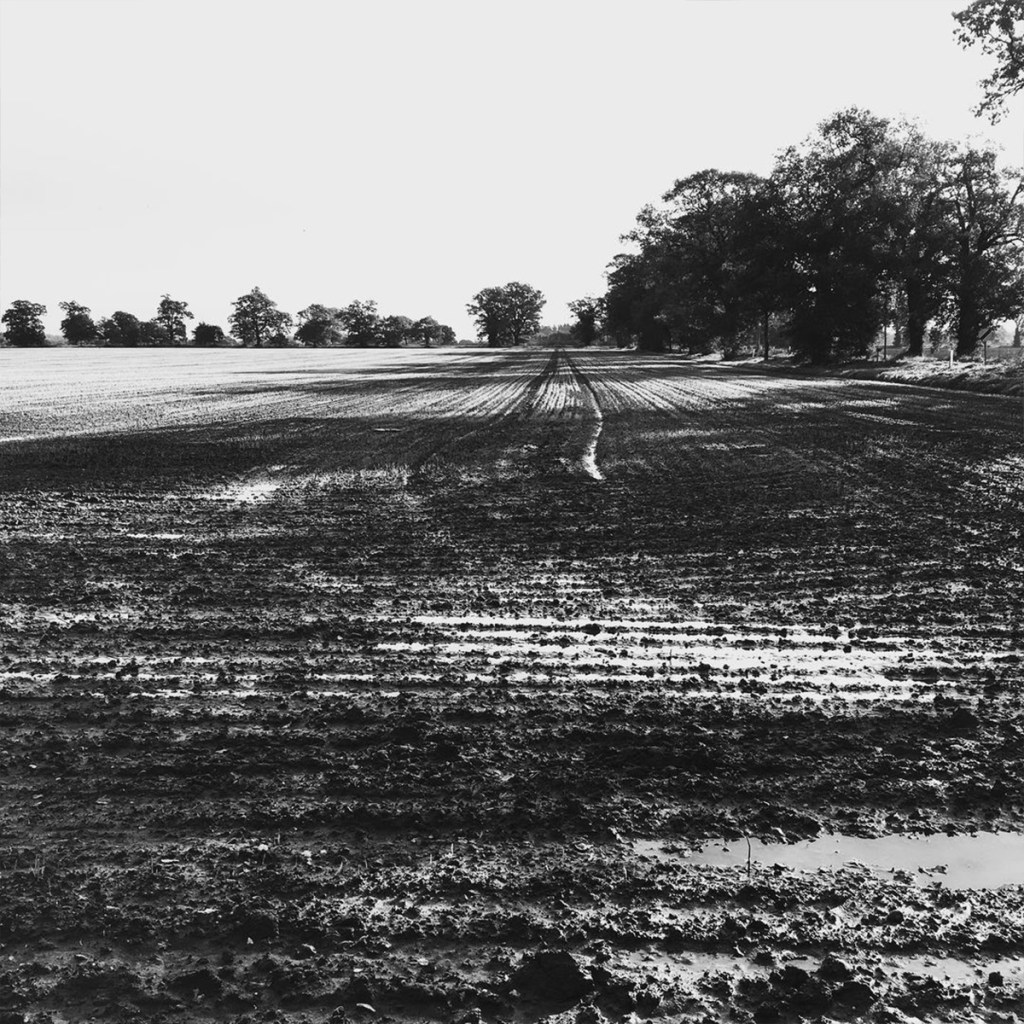
I am definitely obsessed with the flat fields of Suffolk and the clear horizons. Even from a young age I have had favourite fields and just cannot stop photographing the perspective lines.
A lot of your prints take an unusual circular form; how did that come about?
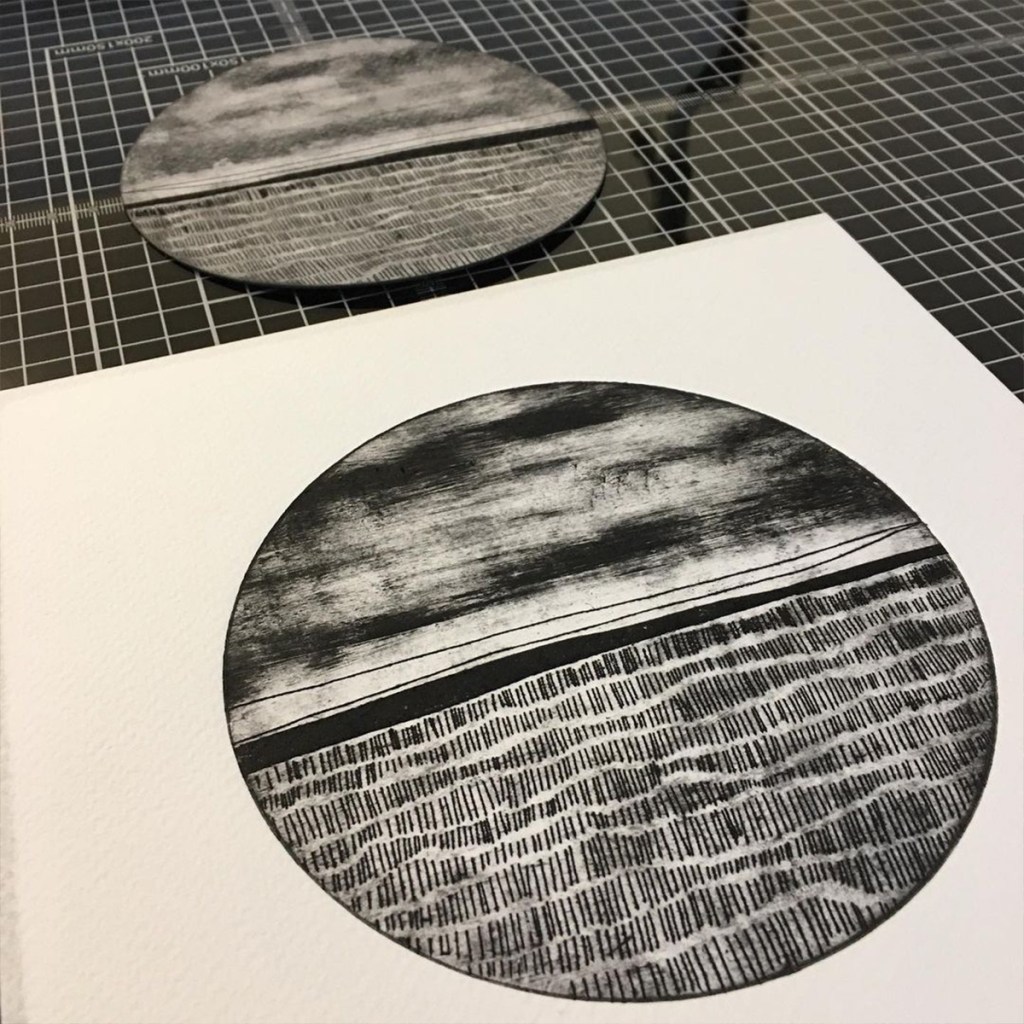
This was by accident really. I had written a project for my students and set the parameter that they all had to produce art work within a circular form. In one particular lesson in the print room, I demonstrated to the students how to create an intaglio plate on a circular piece of drypoint cardboard. When I put it through the press I was really happy with the outcome. This 10-minute demonstration inspired a whole new series of work. Most of my prints evolve from little experiments.
Tell us about the process creating your prints and how you create your plates
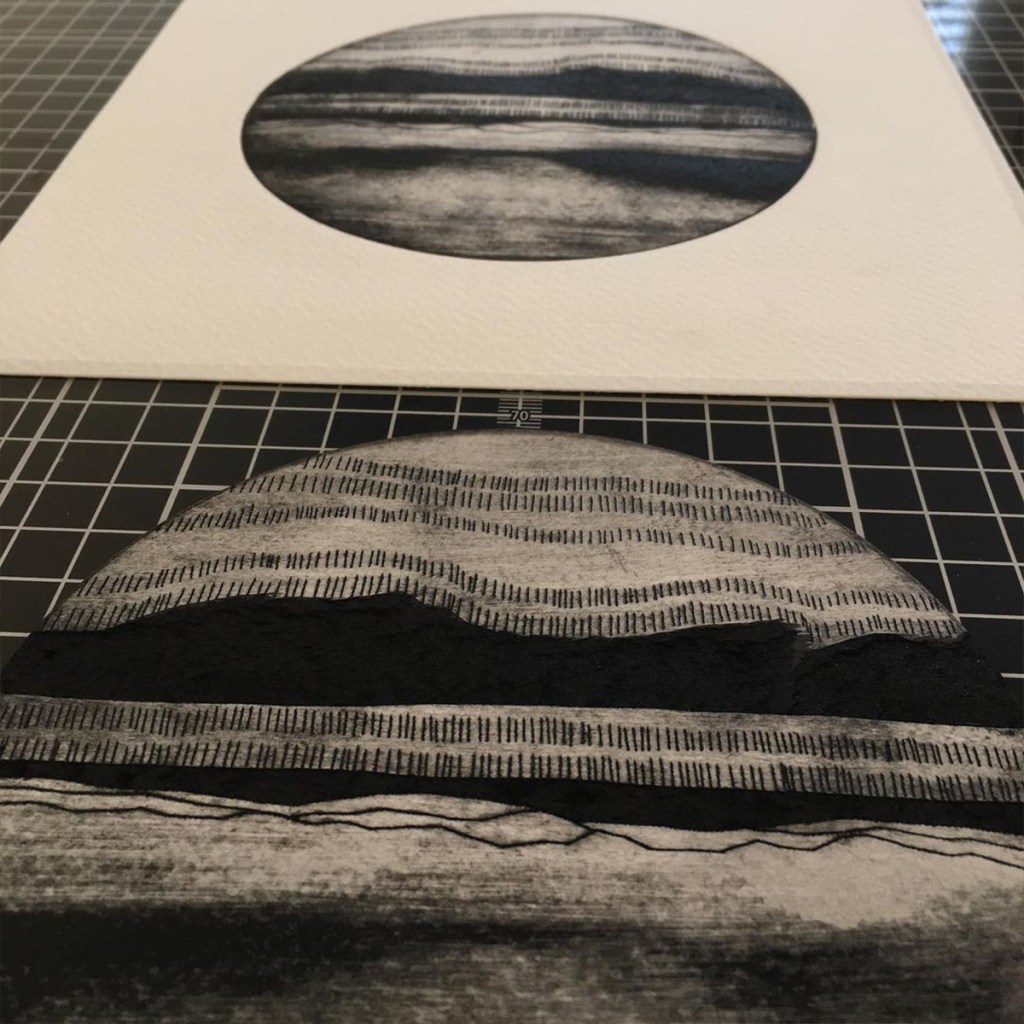
I mostly work on drypoint cardboard and make marks onto the plate by using a craft knife. I also have the choice to peel away layers of the cardboard which will hold the colour of the ink (just like the engraved lines) when I print it. The shiny surface of the plate also allows me to create mono prints as well. I am able to choose how much ink to leave on or wipe of the surface, this makes the printing process very exciting as I am never quite sure how each print will turn out.
You talk about the inking process being part of the experimental nature of the printing. How does the process of printing influence the end result?
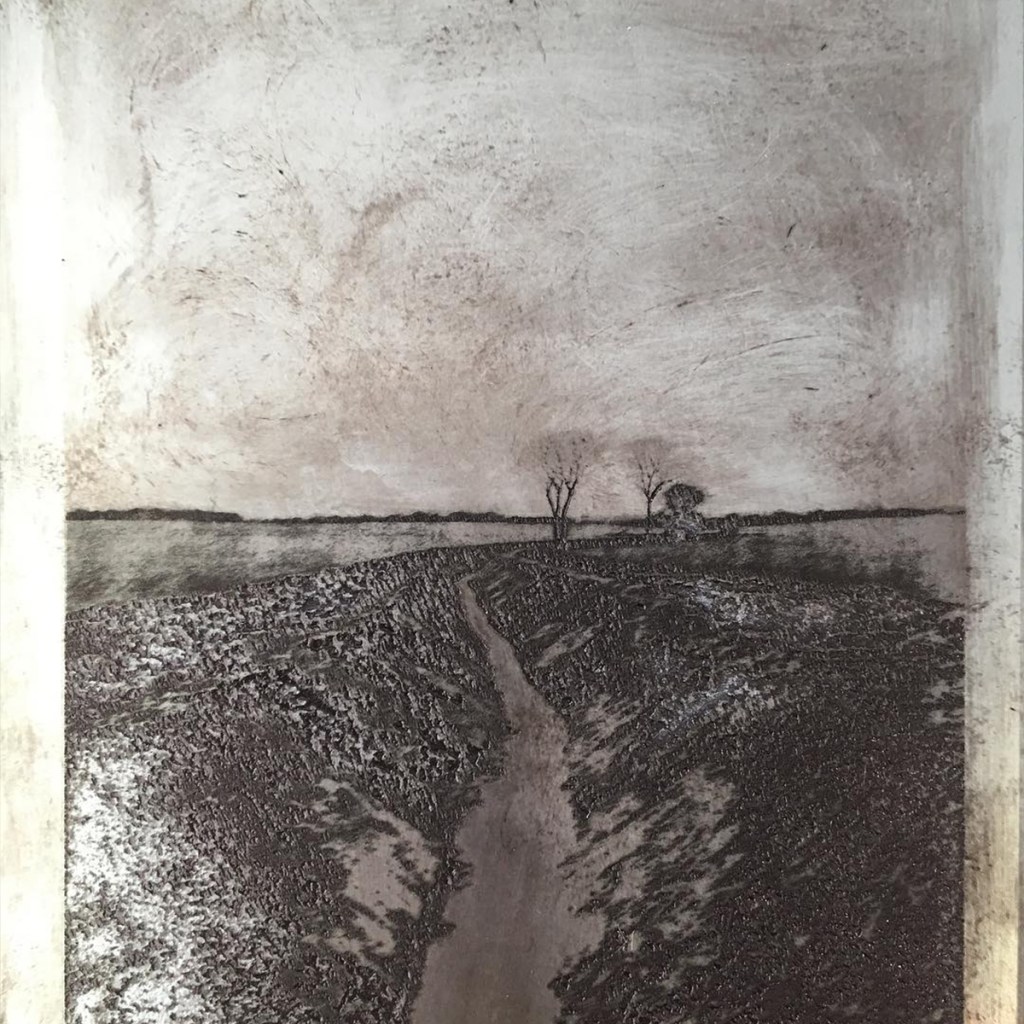
There is so much to consider when printing a plate. I use the scrim to wipe the ink off the plate once it has been pushed into the engraved lines that I have made. The scrim then also becomes a tool to add movement to my prints – it is a painterly approach really. Although I have a certain amount of control that influences the end result, there are other factors at play such as how damp the paper is and the pressure the press is set to. I am just never quite sure how effective a print will be until I peel the paper away from the inked up plate.
You mention walking, where is your favourite place to walk?
My favourite place to walk is getting lost in the fields in the village where I live in Suffolk. After about 10 minutes of walking I am able to let the dog off the lead and I am just surrounded by fields. Lately on my walks I have been seeing a heron in one certain field which is completely amazing.

Have you found lockdown influencing or changing your work in any way?
Teaching online during lockdown has definitely been challenging so this has left me with less time than normal to get out in my studio. I think lockdown has made me appreciate the ability of being able to escape in my printmaking more.
Whats your favourite takeaway (food)?
Well normally I would definitely say my favourite takeway is a good old vegi curry, but I must say that lockdown has made me crave for a big fat juicy halloumi burger with fries.
Thank you Rachel.
To view more of Rachel Sodey’s work visit her Artist’s Page on ofcabbagesandkings.co.uk.




 ofcabbagesandkings