Frankenstein Press

Last week I made a very rainy trip to Bedminster in Bristol to visit Frankenstein Press. Having been at art college in Bristol over 25 years ago, trudging up North Street in the winter drizzle felt very much a walk down memory lane. While much was the same, a few shops and cafes had been spruced up, and there was certainly nothing as exciting as this little place in my day.

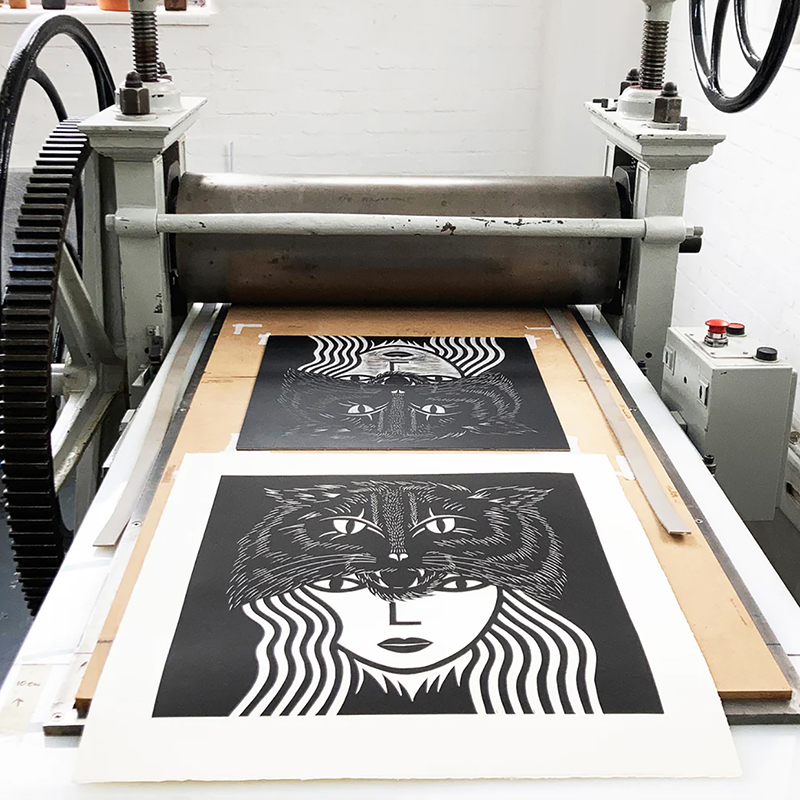
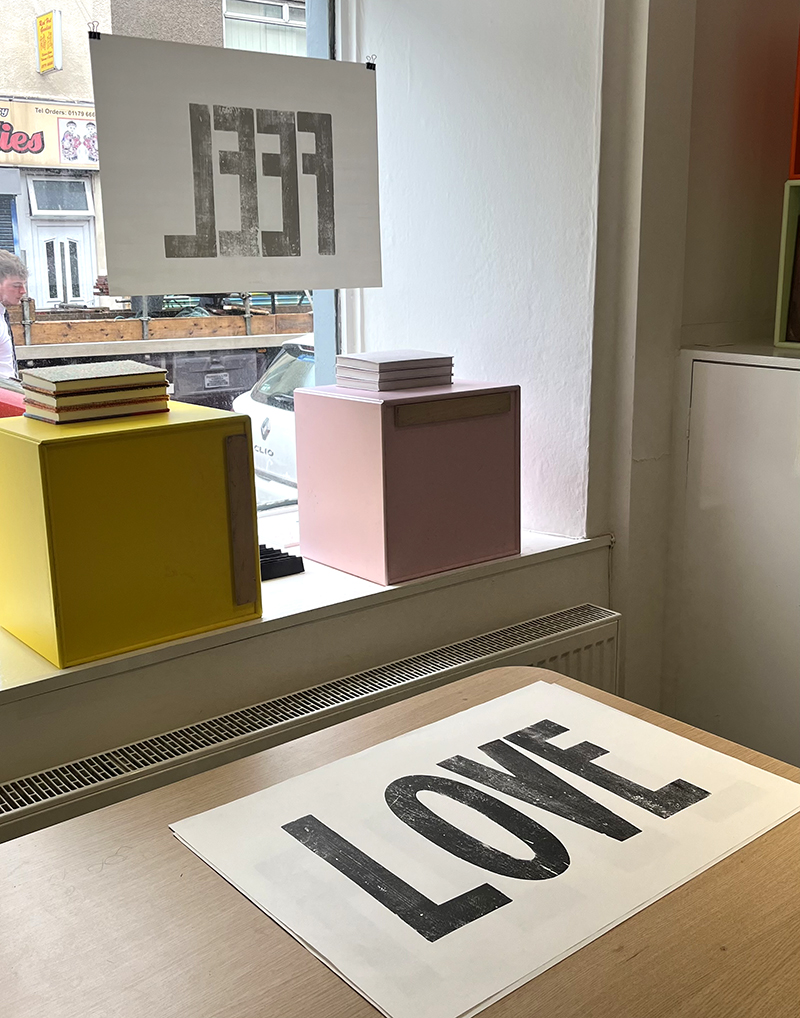
Opened in 2023 by artists Anna Ruiz and Cristian Zuzunaga, Frankenstein Press is a printmaking studio specialising in traditional printmaking techniques and creative workshops. At the heart of the studio stands an old French etching press dating back to the late 1800s. Over the last 10 years, the press has followed the couple on a transformative journey across various destinations – from Barcelona to the idyllic Catalan countryside, and ultimately to the vibrant cities of London and Bristol. During the move from Spain to London, a technician who reassembled the press noticed its unique characteristics. During its lifetime it had undergone several modifications and acquired additional parts, leading him to call it a “Frankenstein press.” And so the name was born.

In an age of instant gratification, dominated by rapid technological advancement, social media and the rise of artificial intelligence, places like Frankenstein Press provide a counter-balance to the pervasive influence of digital technologies. Here you can experience analogue creative techniques and craft by hand, taking time to work at a slower-pace, while nurturing genuine human connections. The studio promotes a range of creative workshops including lino cut, wood engraving and bookbinding, where you can develop new skills and make new friends.

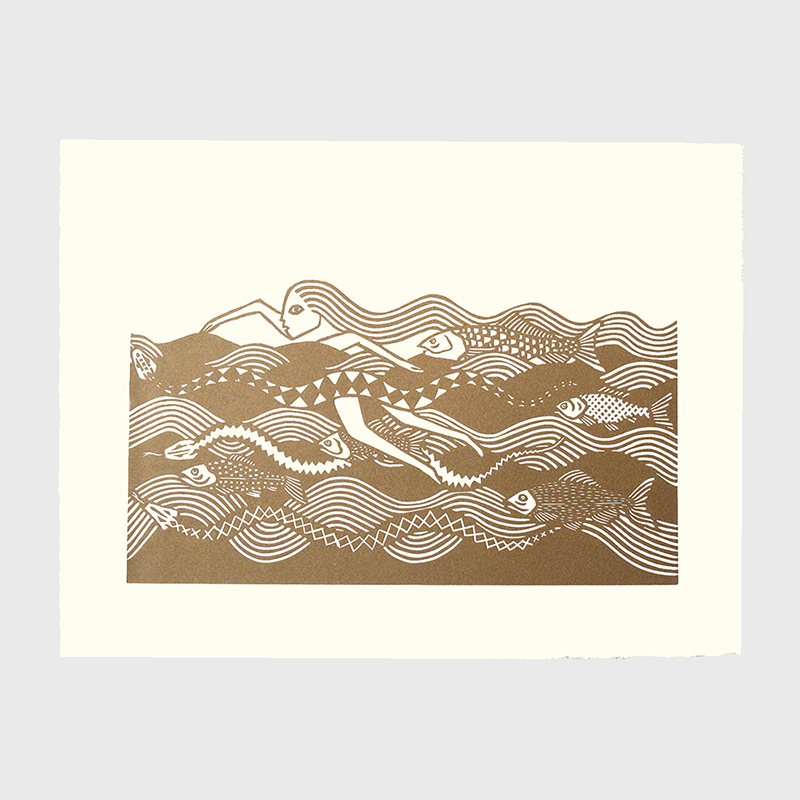
Anna Ruiz leads the linocut sessions. A form of relief printing, the process involves sculpting an image into a smooth linoluem surface, which is then inked and run through the press. Her own work takes inspiration from mythology and spiritual symbolism. Having sold out of all our blue editions of Anna’s Swimming Girl, I came away from my visit with the new gold version. The print is based upon the Greek goddess Amphitrite, goddess of the sea and wife of Poseidon. Amphitrite and her sisters had the power to calm rough waters and provide sailors with safe passage through a storm.
Follow my blog with Bloglovin

CMYK OK!

There are many ways to replicate an image in print, and one of them is to screen print using CMYK colours. So what are CMYK colours and how do artists use them to print their artwork?

CMYK stands for Cyan, Magenta, Yellow and Key. Key usually being the black layer that is used to align the other colours. These four colours are layered and used in combination with halftoning to create an almost infinite number of colours. It starts with separating the cyan, magenta, yellow and black colours from the image and creating new separate images with each of these individual colour values. A halftone is created from these single colour images which means turning the image into tiny dots.

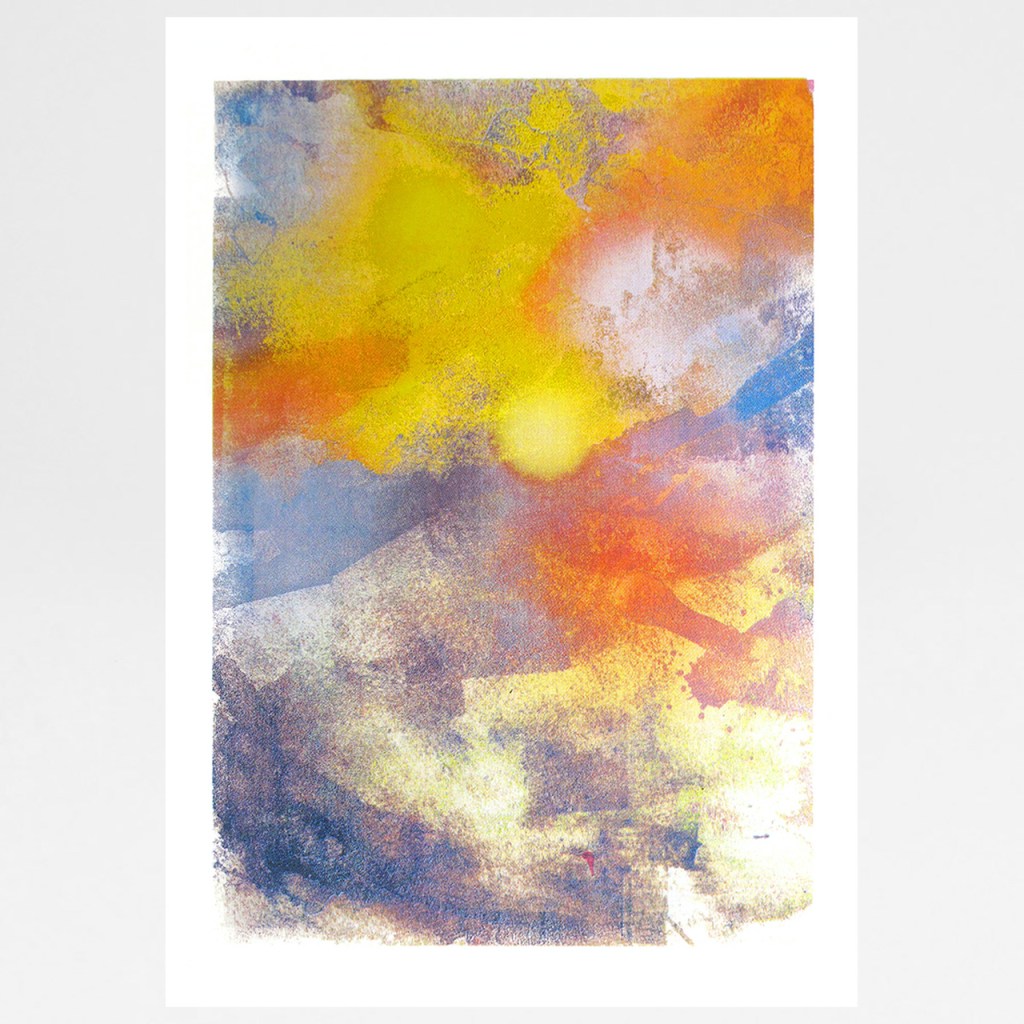
Sunrise by Gavin Dobson

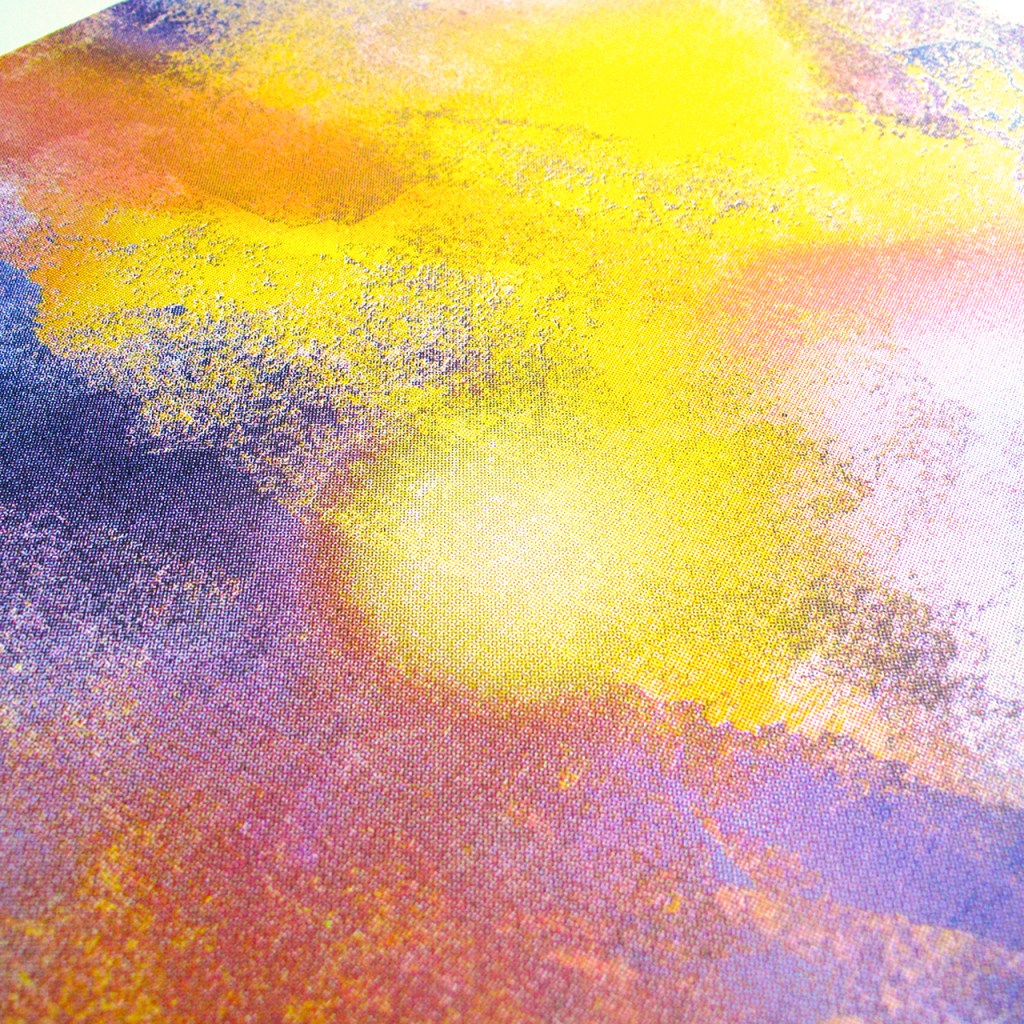
These tiny dots are printed at different sizes depending on how dense that particular colour is in an area of the image. For example an area printed with small cyan dots would appear as pale cyan and larger dots would be a darker cyan. This is because there would be more or less of the white space of the paper showing between the different sized dots. As the dots are so small your eye reads them as one colour when looked at from a distance. To create multiple colours cyan, magenta, yellow and black are combined together at various densities to give the illusion of one colour. On a very basic level an equal sized yellow dot overlaid with a cyan dot would give you green. Changing the size of these dots would give you a pale yellowy green or a darker blue green. With the addition of magenta and black you can create all sorts of colours.

If you look closely at Ponds and Plants by Ashley Amery for example, you can see the small dots that make up the image. It’s easy to see in newspaper imagery where the dots are bigger you get a crude image, and where they are smaller a finer image can be created. Each dot is overlaid at a particular angle so as not to create a uniform pattern that the eye would recognise. If you look closely you can see a rosette pattern of the overlaid dots which is characterful of halftone printing. If the dots are not lined up correctly or are larger, a moiré or interference pattern appears which can cause the image to look blurry.

Below is a selection of artworks that use CMYK separation and halftone printing to recreate the imagery. Some are more obvious but some need a closer look.

Penguin by Gavin Dobson

Screen print on Fabriano paper 310gsm with a deckle edge.

500mm x 700mm

Signed limited edition of 100

Ponds And Plants by Ashley Amery

Screen print on 350gsm GF Smith Colorplan paper

490mm x 550mm

Signed limited edition of 50

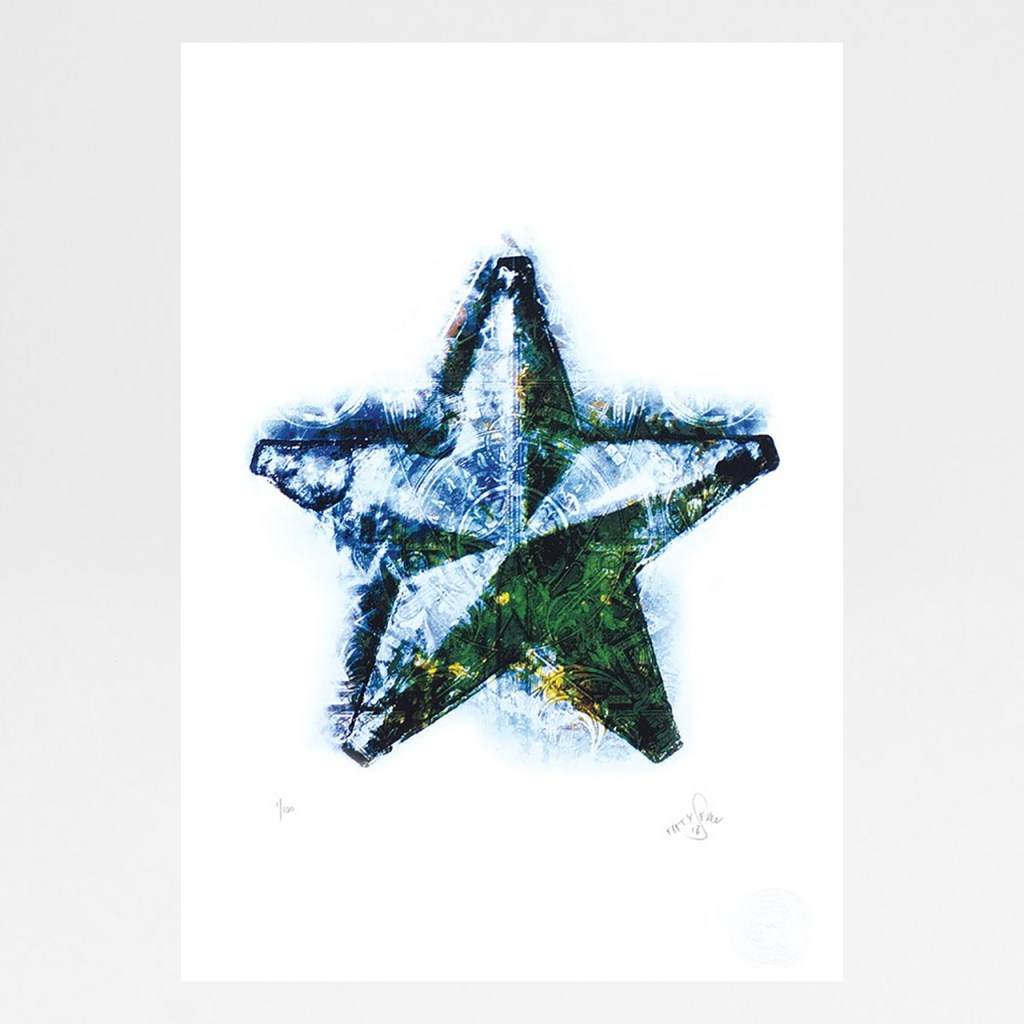
Morning Star by Fiftyseven

Screen print on 330gsm GF Smith paper

297mm x 420mm (A3)

Signed limited edition of 100

Sunrise by Gavin Dobson

Screen print

500mm x 700mm

Signed limited edition of 100

Follow my blog with Bloglovin